Journal · 8 min
Tankless vs. tank water heaters on the Front Range
What actually changes at 5,280 feet: gas size, incoming water temperature, hard water, and when a tank is still the smarter Denver install.
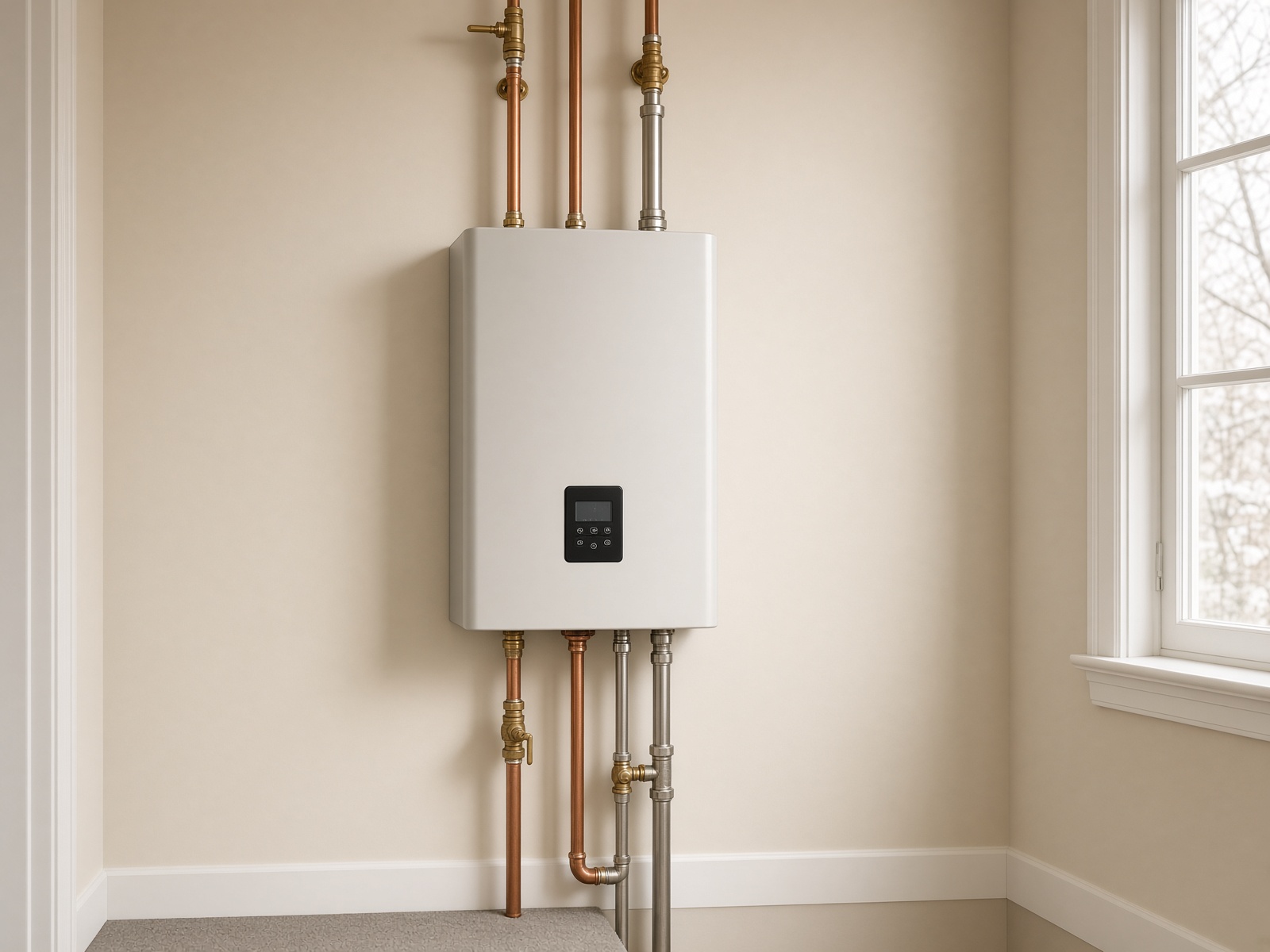
Every national article on tankless vs. tank assumes you live at sea level with soft water. Denver does not. Incoming water in January can sit in the 40s, hardness is high, and a unit de-rated for altitude is not the same machine you saw in the big-box aisle.
The altitude problem
Combustion appliances make less heat up here. Manufacturers publish de-rate tables for a reason. A tankless that ‘covers three showers’ in Phoenix may cover two in Erie on a cold morning, especially if you also run a dishwasher. We size by flow and temperature rise, not by the sticker on the box.
Hard water is the long game
Scale is why tankless gets a bad reputation along the Front Range. The heat exchanger is a narrow path. Skip the annual flush and you buy a new exchanger. Isolation valves at install are not optional. If a quote doesn’t include them, it isn’t a complete quote.
When a tank is still right
- The gas line cannot be upsized without opening finished walls you’re not ready to open
- You take short, sequential showers and never run out now
- The mechanical room has a drain and a pan, and you want a simpler service life
- Budget is the constraint and a good tank with an expansion tank beats a cheap tankless
What we install
Condensing tankless (Navien and peers) when the house can feed it. Quality tanks when that’s the honest job. Either way: pan, drain, expansion where the system is closed, and a conversation about maintenance before you sign.