Journal · 7 min
What to do when pipes freeze in Denver
A practical Front Range freeze guide: where pipes fail, how to thaw without a torch, and the cheap prevention that actually works.
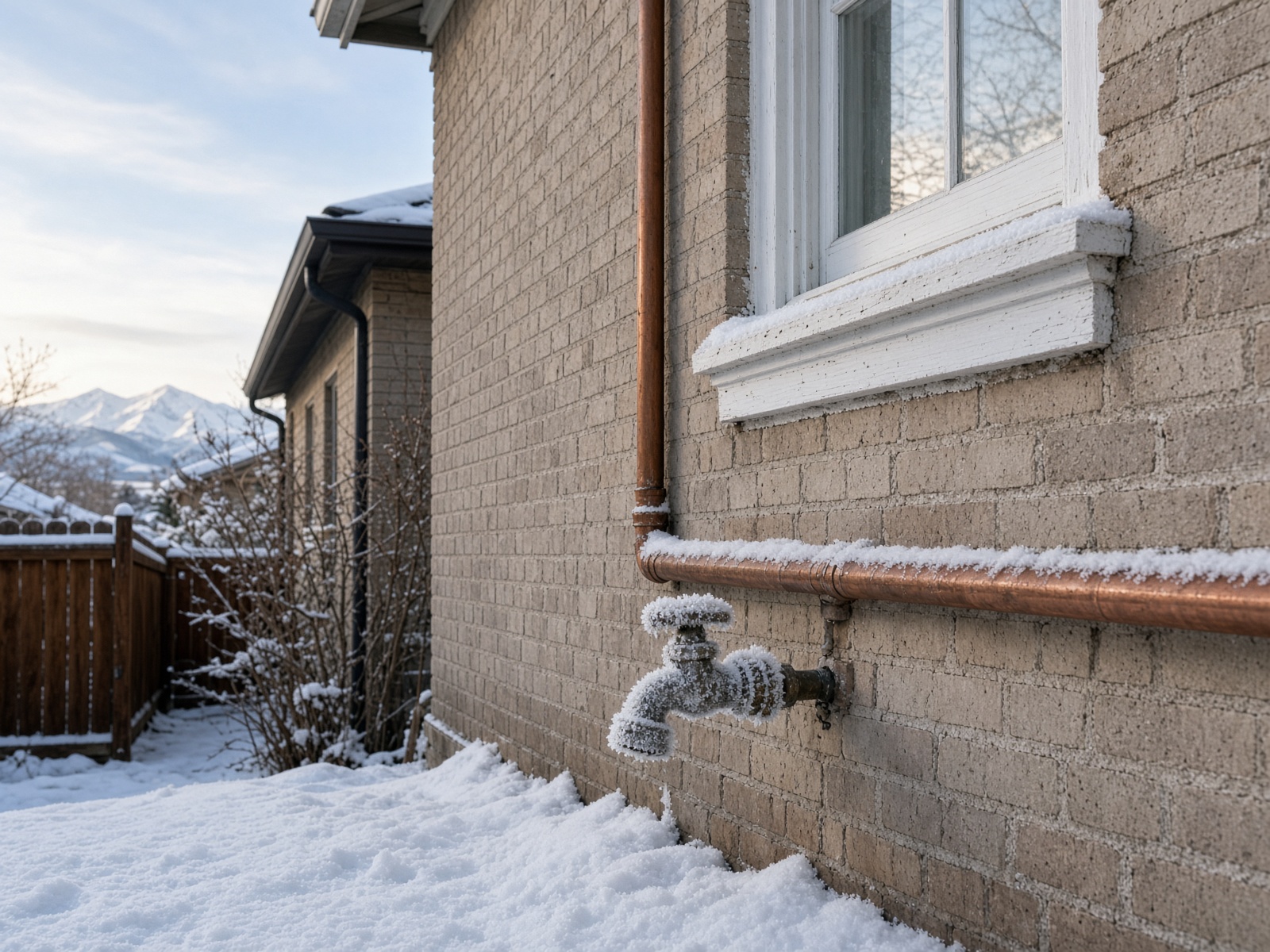
Denver winters are not Anchorage, but they are jumpy — 50 degrees Tuesday, 3 degrees Thursday. Pipes fail on the jump. The usual victims: hose bibs, kitchen sinks on outside walls, garage ceilings, and crawl runs with no heat.
If a fixture is dead and it’s 5°F
- Open the faucet so thawing ice has somewhere to go
- Warm the room, not the pipe, with space heat — never a torch or a roaring heat gun on one spot
- If you see a split or hear spraying, shut the main and call
- A little drip on a known-problem faucet overnight is old advice that still works
Hose bibs are the annual special
A frost-free bib only works if it pitches back into the house and the hose is off. Leave a splitter on it all winter and you built an ice plug on purpose. We replace a lot of burst sills in March that started as a $12 hose fitting in November.
After the first freeze
If a line froze once, it will freeze again. Insulation, moving the run, or a real inside stop is the repair. Heat tape is a patch you will forget to check.